

This is the most common question we get from women considering changing their bra size when they’re still interested in becoming mothers:
“Will I still be able to breastfeed after a boob job?”
The short answer is: most likely yes, but that’s not a very useful answer. The more correct one is – it depends on how the surgery is performed and the type of procedure you choose.
Most women can breastfeed after breast surgery – especially when procedures are planned with duct, nerve and tissue preservation in mind.
At Europe Surgery, we support women not just in achieving their aesthetic goals, but in making informed, biologically sound decisions that fit their wider life plans, including motherhood and breastfeeding. In this guide, we’ll walk you through what the evidence says, what affects breastfeeding after breast surgery, and how to approach your procedure if breastfeeding matters to you.
A Quick Look at How Breastfeeding Works
Before we talk about implants and pregnancy, it really helps to understand the basics. Breastfeeding depends on two key things:
- Milk production in the lobules and ducts – The milk-producing glands (lobules) and transport system (ducts) sit behind the nipple.
- Nerve and hormonal signalling – Proper nerve sensation, especially around the areola, and hormonal responses are what trigger and sustain milk flow during nursing.
Most surgical procedures focus on just altering shape and volume/size, but if they disturb nerves that affect nipple sensitivity, the ducts that deliver the milk, or the blood supply, they can potentially affect milk production.
The good news? Your surgeon can take all of this into account and design your augmentation to ensure you can still produce breast milk. Let’s look at this in greater detail, with each of the breast augmentation procedures.
 What the Evidence Says
Major health authorities, including Johns Hopkins, the NHS, the NIH, CDC and Infant Risk Centre, support the understanding that breast augmentation isn’t an automatic barrier to successful breastfeeding.
That said, individual outcomes vary. Some women may produce as much milk as they need. Others may find their supply is reduced or delayed. This doesn’t mean you can’t offer your baby breast milk – there are many ways to combine direct breastfeeding with expressed milk or supplementing if needed.
So, Can You Breastfeed With Implants?
Both clinical research and real-world experience show that breast implants do not automatically prevent you from breastfeeding. As seen above, most major health institutions report that most women with implants and alternative surgeries are able to breastfeed their babies without any real issues.
That said, individual experience varies, and several factors can influence outcomes. Here are the most important:
1. Surgical Technique & Incision Location
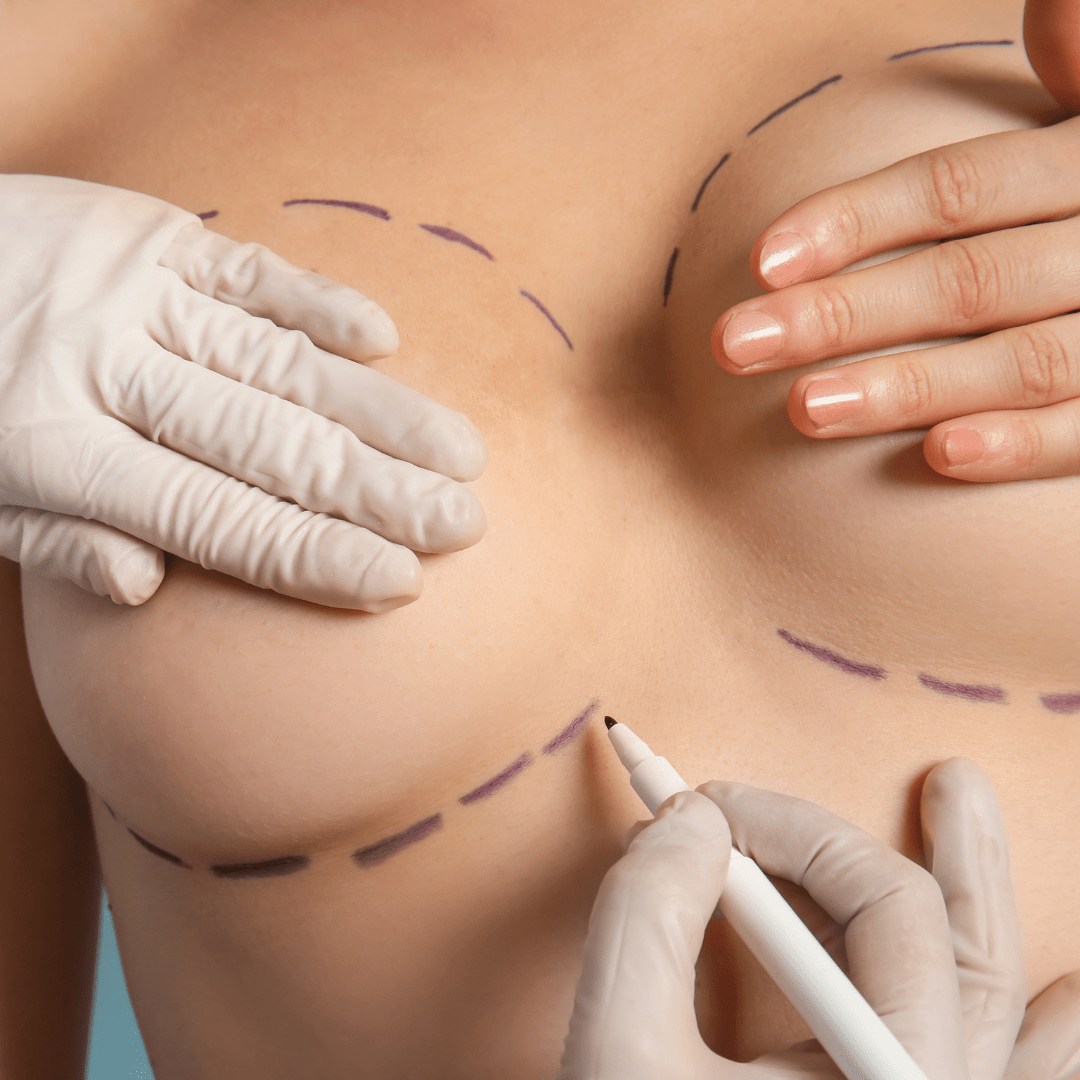
One of the most important aspects is how the surgery was performed and, in particular, where the incisions were made. For example, an inframammary incision (placed in the fold beneath the breast) is generally less likely to disturb milk ducts and the nerves that contribute to sensation – both of which play a part in milk production.
By contrast, a periareolar incision (around the nipple) may carry a slightly higher chance of affecting the ducts or nerve supply that help trigger the hormonal and physical responses involved in breastfeeding.
This doesn’t mean that breastfeeding is impossible with this type of incision (many women with periareolar scars go on to breastfeed just fine), but it is something to talk through with your surgeon if breastfeeding is important to you.
2. Amount of Breast Tissue Preserved
Implants are placed either under the breast tissue or under the muscle. With any breast implant surgery, the more genuine glandular tissue that remains undisturbed, the higher the chances of successful milk production.
3. Scarring and Nerve Disruption
Nerves around the areola play a crucial role in triggering prolactin and oxytocin – the hormones that dictate milk production and release. Surgeries that affect these nerves more extensively (e.g., aggressive periareolar approaches) may have a slightly higher risk of reduced sensation and, in some cases, reduced milk supply.
What About After Breast Lift or Reduction?
Boob jobs don’t just involve silicone implants anymore – there are now many ways to approach breast augmentation surgery. Breast lifts (mastopexy) and reduction procedures are becoming increasingly popular and also involve reshaping and, in some cases, removing tissue.
Because these surgeries can rearrange tissue closer to the milk ducts and nerves, some women continue to breastfeed successfully, but there is a higher chance of reduced milk supply compared with implants alone.
That said, procedures that preserve the tissue under the nipple (the inferior pedicle) maintain breastfeeding potential best, while techniques that remove more tissue around the ductal system may carry more risk.
Interestingly, breast reduction actually has the strongest association with breastfeeding challenges. This is because glandular tissue may be removed, which may include the milk ducts.
This is not universal – many women who undergo lifts or reductions go on to breastfeed beautifully, but the slight risk is worth careful discussion with your surgeon.
Your surgeon can then recommend techniques that aim to preserve as much functional tissue as possible while still achieving the aesthetic outcome you want. For example, a breast uplift (mastopexy) that prioritises nipple-areolar complex support and duct preservation can be designed with breastfeeding potential in mind.
Fat Transfer Breast Augmentation & Breastfeeding
A newer option for volume enhancement is fat transfer breast augmentation, where fat from your own body is used to add subtle volume and contour. Because this breast augmentation procedure doesn’t involve implants or large incisions around the nipple, many surgeons feel that it may have a lower risk of interfering with breastfeeding ability. However, it should be noted that there’s not quite enough data to make a confident statement on this.
If preserving lactation potential is high on your list, this is a thoughtful option to discuss during consultation.
Implant Replacement and Breastfeeding
If you’re considering breast implant replacement, whether to change size, update older implants, or remove and replace them for peace of mind, and breastfeeding is still something you hope to do in the future, we have good news. With Europe Surgery, implant replacement can be planned in a way that preserves the structures involved in breastfeeding.
When performed thoughtfully, replacing implants typically involves minimal disruption to existing breast tissue, allowing milk ducts and nerves to remain as intact as possible. This is especially important if you haven’t yet breastfed, as maintaining these pathways supports your body’s natural ability to produce and release milk later on.
In cases where implants are removed and new ones placed, the approach can be carefully tailored to your anatomy and personal goals. Surgeons can often reuse existing incision sites or select techniques that reduce unnecessary interference. The key lies in planning – understanding your long-term intentions and incorporating them into the surgical strategy from the outset.
 Tips for Supporting Breastfeeding After Surgery
Whether you’ve had surgery already or you’re planning a future pregnancy, here are practical ways to support lactation:
1. Choose Your Surgical Technique Wisely
Discuss incision location and tissue preservation with your surgeon if your ability to produce milk is a priority.
2. Prioritise Skin and Nerve Preservation
Surgeries that preserve more tissue and nerves around the nipple typically give you a better chance of effective breastfeeding. So consider putting off a reduction surgery until after nursing your baby, just in case.
3. Work with Lactation Support
Even women who experience reduced supply can often increase production with the help of a lactation consultant. So if you are not producing quite enough breast milk, call in the experts.
4. Consider Expressing Often
Breast milk supply is driven by demand. Regular expression (even with a pump) can help keep your milk supply constant and consistent.
5. Be Flexible and Kind to Yourself
Every woman’s body responds differently. Your baby can thrive on a combination of breast milk, expressed milk or formula – all with love and nourishment.
 Europe Surgery Is Here for Your Whole Journey
Whether you are considering breast augmentation, want to replace your silicone breast implants with modern Motiva implants, or are looking into breast reduction or uplift surgery, Europe Surgery offers a considered, expert-led approach that respects both how you want to look and how you want your body to function in the years ahead.
We understand that breast surgery is rarely just about aesthetics. For many women, decisions around implants, lifting or reducing the breasts are intertwined with future plans, including pregnancy, breastfeeding, and long-term comfort. That’s why careful pre-surgical planning is central to everything we do.
If breastfeeding matters to you, we factor that into incision choices, implant placement and surgical technique, helping to preserve breast function wherever medically possible.
Our care doesn’t stop when surgery is complete. Europe Surgery provides structured, personalised aftercare designed to support healing, protect results and help you feel confident as your body settles and adapts. From your first consultation to follow-up care, you’re supported by an experienced clinical team that understands the nuances of breast surgery and takes the time to guide you through them.
Patients also choose Europe Surgery for the reassurance of working with highly experienced, award-winning surgeons, including Dr Adam Kaleciński, whose expertise, precision and patient-centred approach are trusted by international patients seeking safe, natural-looking outcomes. Combined with our modern clinic, EU-regulated standards and transparent, all-inclusive packages, this allows you to focus on your journey – not the logistics.
If you’re considering:
- Breast enlargement to enhance volume and shape
- Breast reduction to improve comfort and balance
- Breast uplift to restore firmness and position
Our team is here to help you make an informed, confident decision that supports both your present goals and your future plans.
At Europe Surgery, we don’t believe in off-the-shelf procedures. We believe in long-term results, thoughtful care and supporting you through every stage – now, and for whatever comes next.
Final Thoughts on Breastfeeding & Body Confidence
You shouldn’t have to choose between feeling confident in your body and planning for motherhood. With thoughtful surgical technique, open communication and realistic expectations, it’s entirely possible to pursue your aesthetic goals and nurture your future family.
If you’re thinking about breast surgery and hope to breastfeed someday, we encourage you to bring these questions to your consultation. Together, we’ll find a plan that fits your body, your timeline and your life with clarity and care.
Ready to talk to an expert? Book a consultation with Europe Surgery today.