
If you’ve started researching facelift surgery, you’ve probably come across two main options: the mini facelift and the full (or traditional) facelift.
On paper, they obviously sound similar. In reality, they’re actually designed for different stages of ageing and different aesthetic goals.
Choosing between them isn’t about “bigger vs smaller.” It’s about matching the right procedure to your anatomy, skin quality, and long-term expectations. This guide will walk you through the real differences, honestly and clearly, so you can feel confident about your choice.
What Is a Full (Traditional) Facelift?
A full facelift is the most comprehensive and complete facial rejuvenation procedure between the two. It addresses the midface, lower face, jawline and neck, repositioning deeper structures rather than simply tightening skin.
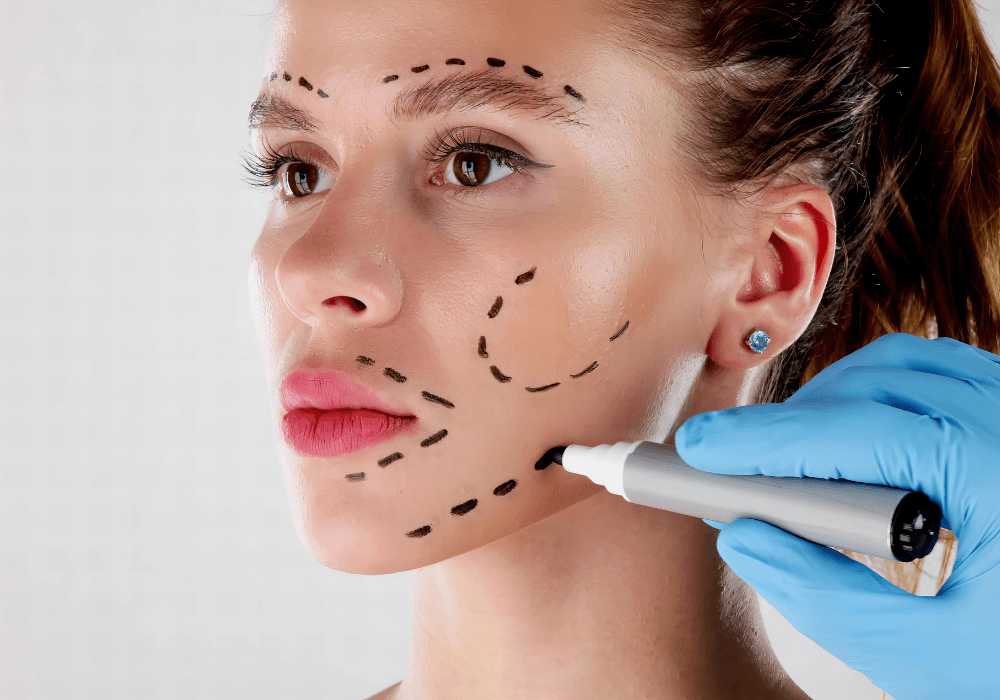
With a traditional facelift, incision typically begins at the temples, by the hairline, and continues around the natural contours of the ear, extending into the lower scalp. The placements of these small, neat incisions are designed to keep scars discreet and well concealed.
During the procedure, here’s what you can expect:
- Facial fat may be sculpted or redistributed from the cheeks, jowls and neck
- The deeper facial tissues and muscle layers are repositioned and lifted
- Sagging skin is gently redraped over the new contours
- Excess skin is trimmed away
If neck laxity is also an issue, a small additional incision under the chin may be made to improve definition and remove excess fat. The incisions are then neatly closed with sutures or skin adhesives.
Importantly, modern facelift surgery focuses on lifting the deeper structural layers of the face, not simply pulling the skin tight. This is what creates natural, long-lasting results rather than a stretched look.
What Is a Mini Facelift?
A mini facelift, sometimes referred to as a limited incision facelift or upper facelift, is a less extensive procedure designed to counteract earlier signs of ageing.
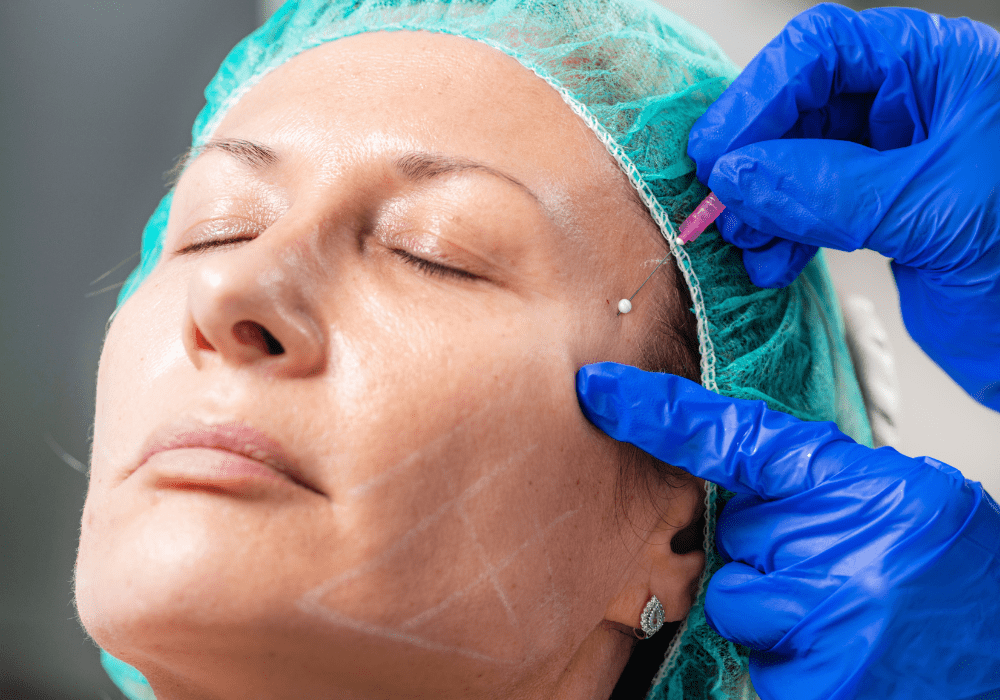
This smaller lift typically uses shorter incisions, beginning at the temples and continuing around the ear. In some variations, small incisions may also be placed within the lower eyelids or under the upper lip, depending on the surgical approach.
A mini facelift usually focuses on:
- Mild jowling
- Early jawline softening
- Moderate skin laxity
This lift isn’t usually used to address significant neck sagging or deeper structural ageing to the same degree as a full facelift.
Where Does a Neck Lift Fit In?
The neck is one of those features that tend to show our age the most, and as such, many of our clients want a neck lift to be part of their facial procedure. However, while historically neck lifts and facelifts were sometimes performed separately, modern surgical guidelines now recommend that a neck lift be performed as part of a full facelift, rather than in isolation.
Why? Because lifting the neck alone can create an imbalance around the ears and jawline if the surrounding facial tissues are not addressed at the same time. However, when incorporated into a full facelift, a neck lift can correct:
- Sagging jowls
- Loose neck skin
- Excess fat under the chin
- Loss of jawline definition
Combining a neck lift with a full facelift ensures smooth, harmonious results. With a mini facelift, we cannot confidently say the same, and your surgeon will look very carefully at your anatomy and options before recommending this. We want you to walk away from this experience feeling confident, beautiful and yourself, not imbalanced or stretched.
The Key Differences of Mini vs Full Facelift
Before choosing what would best suit your needs and desired outcome, it helps to know exactly how these procedures differ. Here are the specifics:
1. Extent of Correction
A mini facelift addresses early sagging in the lower face. A full facelift treats more advanced ageing across the cheeks, jawline and neck.
If your concerns are limited to mild jowls and subtle laxity, a mini facelift may be the perfect procedure for you. If you’re seeing significant skin looseness, deep folds or neck banding, a full facelift is usually the more appropriate choice.
2. Longevity of Results
A full facelift repositions deeper tissues more comprehensively, meaning that results generally last longer.
A mini facelift can provide a beautiful improvement, but may not hold up as long if changes due to ageing are already more advanced.
3. Recovery Time
A mini facelift often involves slightly less downtime because it’s not surgically extensive. However, both procedures are likely to cause a little swelling and bruising, which will settle over several weeks, with full refinement taking several months for most.
Recovery is not just about taking a few days off work – it’s about allowing tissue to heal properly for the most natural result.
4. Natural Appearance
When performed correctly, both of these procedures should look absolutely natural.
The difference lies in how much correction is desired. Attempting to fix significant ageing with a limited procedure can sometimes lead to underwhelming results, or the need for revision surgery sooner rather than later.
Choosing the right procedure from the start produces the most satisfying, long-term outcome.
Which One Is Right for You?
This is likely the question you’re here to ask: Should I get a mini facelift or a full facelift? We’d love to give you a simple, universal answer, but the honest one is that it’s deeply personal.
As we’ve discussed, choosing between a mini facelift and a full facelift isn’t about picking the “bigger” or “smaller” procedure. It’s about understanding what your face actually needs.
Your age plays a role, but it’s not the deciding factor. What matters more is your skin quality, how much structural support has shifted, the degree of jowling or neck laxity, and how long you want your results to last before stepping back into Europe Surgery.
Some patients in their 40s with early sagging and good skin elasticity can achieve beautiful, fresh-looking results with a mini facelift. It can feel like turning the clock back five to seven years – subtle, elegant, natural.
But if there is more significant laxity through the lower face and neck, or if muscle bands and deeper tissue descent are already visible through the skin, a full facelift is often the more appropriate choice. In these cases, opting for a smaller procedure can lead to results you’re simply not happy with, or the need for revision soon after. A full facelift addresses the deeper structural changes, not just the surface.
All that said, you may not be surprised that the most important factor is not the procedure – it’s the assessment. A responsible, experienced surgeon will guide you toward the option that genuinely suits your anatomy and long-term goals.
Sometimes that means recommending the more comprehensive solution. Sometimes it means advising you to wait.
The right choice is the one that gives you results that look natural, feel proportionate, and age well over time. And that’s what we at Europe Surgery are experts in. So don’t worry, you needn’t have all the answers now – we’ll help you uncover them in consultation with a highly experienced surgeon instead.
How Blepharoplasty Can Complement a Facelift
While a facelift focuses on lifting and tightening the lower face and neck, many patients also want some adjustments made around their eyes, which tend to show signs of ageing most prominently.
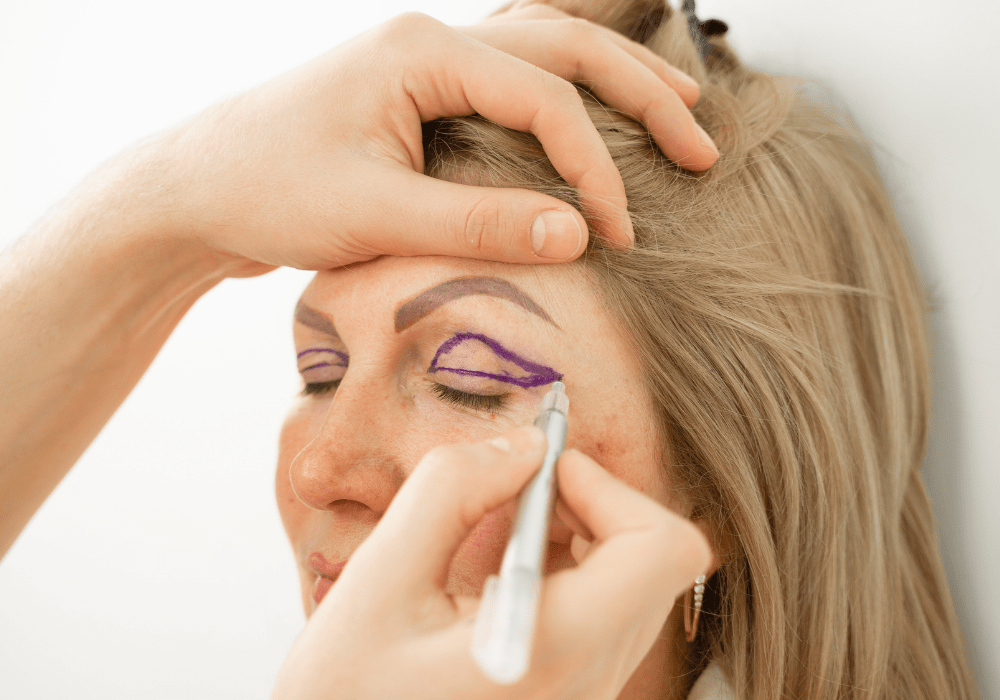
Blepharoplasty specifically targets excess skin, puffiness and under-eye bags on the upper and/or lower eyelids. As we age, the delicate skin around the eyes thins and loses elasticity, leading to hooded lids that can make you look tired or older than you feel. By removing or repositioning excess skin and fat in this area, blepharoplasty creates a smoother, more refreshed eye contour.
For many, combining a facelift with blepharoplasty creates a harmonious overall rejuvenation. The facelift restores structure and lift to the lower face, while eyelid surgery opens the eyes and brightens the upper face, often resulting in a more balanced, youthful and well-rested appearance.
Facelift Surgery at Europe Surgery
“Mini” can sound appealing because it feels lighter or less intense. But in facial rejuvenation, under-treating can be just as disappointing as over-treating.
At Europe Surgery, the focus is always on anatomical balance and long-term harmony. The goal is not to make you look different, but to restore structure where it has shifted, allowing your face to look refreshed, not altered.
Every face ages uniquely. That’s why a personalised plan is essential.
At Europe Surgery, facelift procedures are performed with a strong emphasis on precision, proportion and natural movement. Whether a limited incision facelift or a full traditional facelift is recommended, our surgical approach prioritises:
- Discreet incision placement
- Deep tissue repositioning for lasting support
- Balanced correction across the face and neck
- Safety and meticulous aftercare
The aim is not to create a tightness that mitigates wrinkles, but to restore definition and lift in a way that still feels authentically you.
If you’re considering a facelift and want clarity about which option truly suits you, booking a consultation is your next step, so you can move forward with confidence.