

Hair loss conversations often feel like they only involve and revolve around men, which can make thinning hair even more distressing for women, precisely because it’s less openly discussed.
If you’ve noticed your part widening, your crown thinning, or your hairline subtly shifting, you’re likely not imagining it, and you’re certainly not alone. Female pattern hair loss is more common than people realise, and it can have a deep emotional impact on confidence, identity and day-to-day life.
The good news? There are now highly effective, natural-looking solutions available. These include advanced female hair transplant for thinning crown treatments, hairline-lowering surgery for women, and the best part is, you don’t have to shave your head like men do when getting a hair transplant.
Interested in your options? In this guide, we’ll walk you through what’s happening, what your options are, and how to move forward with confidence.
Understanding Female Hair Loss (And Why It Feels Different)
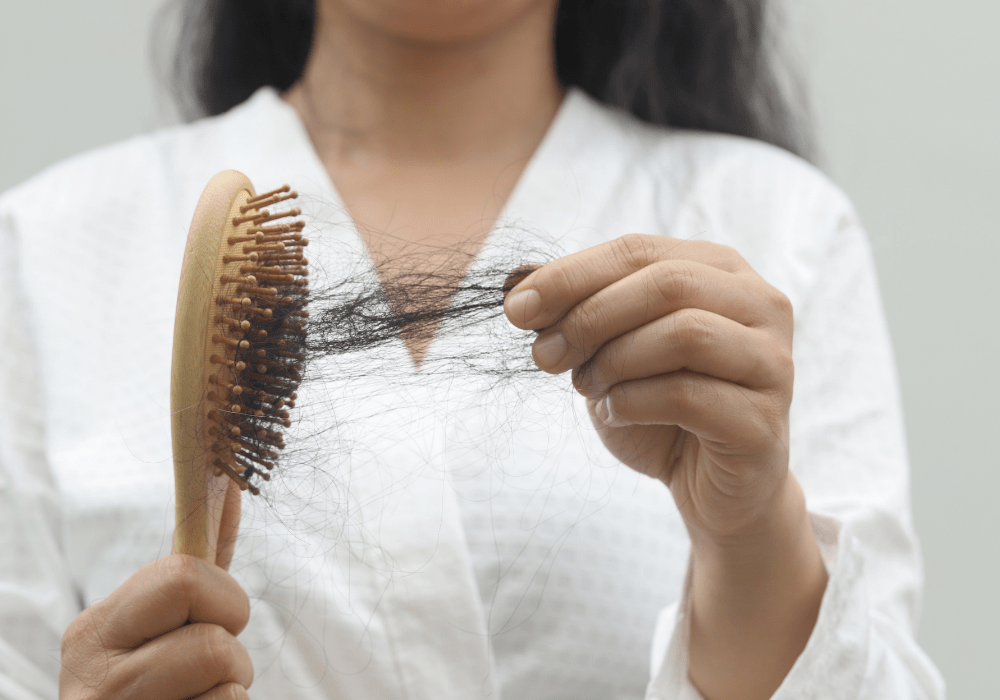
Male pattern baldness generally suits its name – it has a pattern. This tends to lead to receding hairlines or bald patches. Women, on the other hand, typically experience more diffuse thinning. This often shows up as a widening parting, thinning at the crown, and just less hair in general, which can also lead to more scalp visibility
Because it’s gradual, it can be easy to dismiss this type of hair loss at first – until styling becomes harder, volume disappears, and your reflection starts to feel unfamiliar.
Emotionally, this experience can be isolating and difficult. As women are taught that their hair is their “crowning glory” and its importance is always clear, the loss can be particularly painful. And many women feel they have to “just deal with it,” when in reality, there are solutions that can restore not just hair, but confidence.
When Is a Female Hair Transplant the Right Option?
Not all hair loss needs surgery, but when thinning becomes persistent and noticeable, especially in the crown or parting, a hair transplant can offer a long-term, natural solution.
You’re likely a good candidate if:
- Your thinning is stable (not rapidly progressing)
- You still have healthy donor hair (usually at the back of the scalp)
- You want a permanent solution rather than temporary fixes
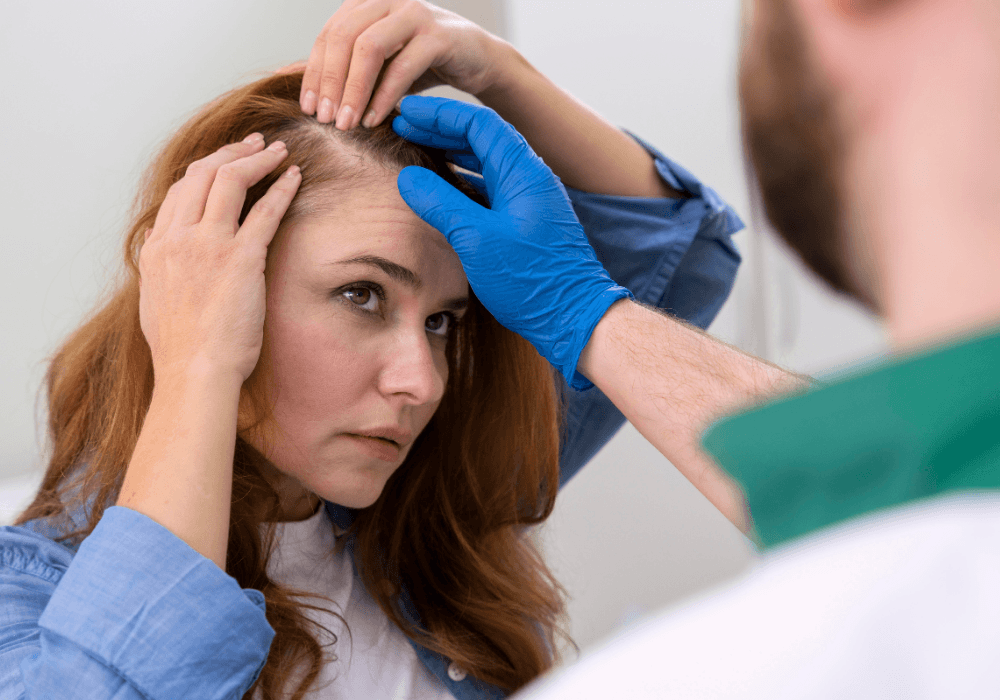
At Europe Surgery, every treatment starts with a careful consultation to gain a proper understanding of the cause of your hair loss (whether hormonal, genetic, or stress-related) before our highly experienced surgeon recommends the most appropriate approach.
Here are the main female hair transplant procedure options at Europe Surgery:
Targeting the Thinning Crown and Widening Part
One of the most common concerns we see in the women who come to Europe Surgery for a hair transplant is thinning around the crown or parting.
When this type of female pattern baldness is the issue, we carefully redistribute your own healthy hair follicles into these sparse areas. The key to this method is precision – each graft is placed at the correct angle and density to blend seamlessly with your healthy hair.
The result isn’t just “more hair” – it’s restored fullness that looks completely natural, even up close. And over time, the transplanted hairs grow just like the rest of your hair, so you can wash, style and treat them as normal.
Hairline-Lowering Surgery for Women
For some women, the concern isn’t just hair thinning – it’s an uncomfortably high hairline, or perhaps an unbalanced one. Hairline-lowering surgery for women is a more specialised procedure that’s designed to bring the hairline forward, creating a softer, more proportionate frame for the face.
This option can be especially beneficial if you’ve always had a high forehead or if your hairline has receded a little. The result is subtle, but it can dramatically improve overall harmony and confidence.
Why Women Choose Europe Surgery
Choosing to address hair loss is a deeply personal decision, and it deserves a clinic that treats it that way. At Europe Surgery, the focus is not on technical excellence alone, but on understanding the emotional side of hair loss too.
Patients choose Europe Surgery for:
- Experience in female hair restoration, not just male procedures
- Advanced techniques, including non-shaven transplants
- Natural, density-focused results tailored to female hair patterns
- Discreet, supportive care from consultation through to recovery
- Affordable female hair transplant cost
You’re not treated as a “case” – you’re supported as a person making a meaningful change.
You Don’t Have to Just Accept Hair Loss
Thinning hair can quietly affect how you feel every single day, from how you style your hair to how confident you feel when out and about with your friends. But it’s not something you simply have to live with. With modern techniques like those used by our hair transplant surgeon, Dr Marwan Saifi, and shared with you in this article, there are now solutions that are subtle, effective, and designed around you.
If you’re starting to explore your options, the best first step is a conversation – one that’s honest, pressure-free, and focused on what feels right for you. Because restoring your hair isn’t just about appearance – it’s about feeling like yourself again.
If you’d like to have a chat with us, just contact us through our web form. Our team would be happy to help you feel like your full self again!
Female Hair Transplant FAQs
Want a little more info? Here are some of the questions we get most often at Europe Surgery:
Do I Have to Shave My Head for a Hair Transplant?
One of the biggest barriers for women who are considering a hair transplant is the idea of shaving their head (understandably!).
The good news is – you don’t actually have to.
A non-shaven hair transplant allows surgeons to extract and implant hair without shaving large visible areas. Since a woman’s hair growth tends to take years to grow back, and a key reason for a transplant is often to feel more confident and yourself, a shaven head often simply doesn’t appeal.
So the fact that this procedure can be done without the shaved head that men’s hair transplants tend to include makes the procedure far more discreet, with minimal disruption to your day-to-day life.
It’s a more delicate and time-intensive technique, but for the right candidate, this FUE hair transplant offers a seamless solution to permanent hair loss in women.
Do Female Hair Transplants Hurt?
Not at all – our surgeon will use a local anaesthesia to ensure you’re comfortable throughout the procedure. You may feel a slight sting when the anaesthesia is injected, but it only lasts a second or two.
After the anaesthesia wears off, you may experience a little tightness, soreness, or swelling in the donor and recipient areas. This is completely normal and subsides within a few days.
What Results Can You Expect?
It’s important to keep in mind that hair transplants don’t deliver overnight results, and that’s actually a good thing.
Because the hair actually starts to grow naturally from your scalp, results will develop gradually. Here’s what you can expect after a woman’s hair transplant procedure:
- First few weeks: Transplanted hairs may shed (this is normal)
- 3 – 4 months: New growth begins in hair grafts
- 6 – 12 months: Noticeable improvement in density and coverage
- 12+ months: Full, natural hair growth
The end result is your own hair, growing in the areas that once felt sparse – not a “hair transplantation look,” but a return to what feels like you.