Losing a tooth can feel like a much bigger deal than you’d expect. It can change the way you smile for photos, make chewing awkward, or simply make you think about your teeth far more often than you’d like.
And while dentures and bridges can work fantastically for some people, dental implants offer something more permanent: they replace the root of the missing tooth, creating a stable foundation for a crown, bridge or denture.
At Europe Surgery, dental implants form part of our cosmetic and reconstructive dentistry service in Wrocław, Poland. Our extremely experienced dental team provides implant treatment alongside crowns, bridges, veneers and other restorative procedures.
So, we’ve put together this guide to explain how dental implants work, what implantology involves, how long recovery can take, and how implants compare with other ways of replacing missing teeth. Let’s get into it:
What Is a Dental Implant?
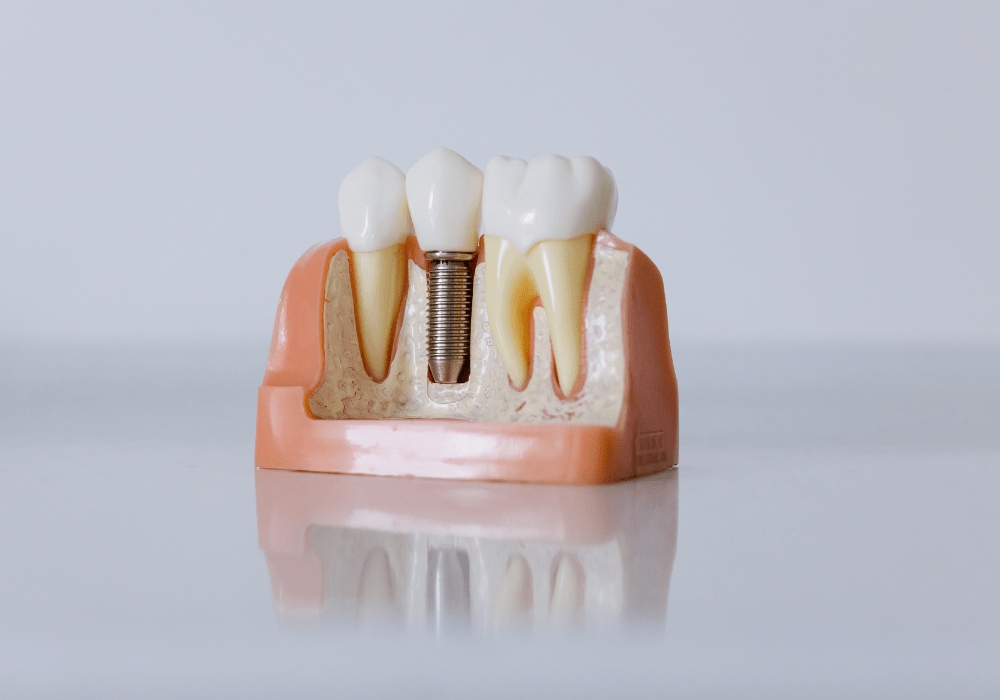
A dental implant is essentially an artificial tooth root.
It is typically made from titanium and gets placed into the jawbone, where it provides a fully stable foundation for a replacement tooth. The implant will integrate with the bone, and once the mouth has healed from the procedure, it can support a crown, bridge or denture.
So the implant itself isn’t the visible tooth – it’s the foundation underneath it.
From here, a visible replacement can be added, which may be:
- A single crown for one missing tooth
- A bridge supported by implants for several missing teeth
- An implant-supported denture
- A full-arch restoration supported by several implants
In other words, implant treatments are highly adaptable, and you don’t necessarily need an individual implant for every missing tooth. Dental implants are a well-established treatment and, with a little care, provide a long-lasting solution for missing teeth.
Why Do People Choose Dental Implants?
The obvious reason is to replace a missing tooth, but the benefits go well beyond filling a gap.
A missing tooth can affect the way you bite and chew, and many find themselves becoming increasingly cautious about what they eat. Others feel very aware of the gap when smiling or talking. Others experience both.
An implant-supported tooth provides a permanent alternative to a removable denture and feels much more like part of your natural bite.
For many patients, the appeal is simply being able to stop thinking about the missing tooth.
You can smile without automatically hiding the gap, sit down for a meal without working out which foods to avoid, and you can have a replacement tooth that’s designed to look and function as naturally as possible.
Of course, whether an implant is appropriate depends on your oral health, bone volume, medical history and the condition of your remaining teeth and gums. Which is why a proper dental assessment always comes first.
How Does Dental Implant Treatment Work?
Dental implant treatment tends to be a process, and the exact timeline depends on your teeth, gums and jawbone. A typical treatment pathway includes the following stages:
1. Consultation and Assessment
The first step is understanding what’s happening in your mouth. Your dentist will assess the missing tooth/teeth, the condition of your gums and the amount of bone available to support an implant. Imaging or X-rays may be taken as part of the planning process.
This is also the time to discuss what you actually want from treatment. Replacing one front tooth is very different from rebuilding an entire arch, so be sure to be specific.
2. Bone Grafting, If Required
Some patients don’t have enough healthy bone to support an implant immediately.
This can happen if a tooth’s been missing for some time, as the jawbone can gradually lose volume. In these circumstances, bone augmentation or grafting may be recommended before, or sometimes alongside, implant placement. Not everyone needs a bone graft – your dentist will determine this during the assessment.
3. Implant Placement
The implant, made from titanium, is placed into the jawbone beneath the gum. The procedure is normally performed under local anaesthetic, although sedation or general anaesthesia may sometimes be appropriate depending on the complexity of treatment and the patient’s circumstances.
The aim is to position the implant accurately so that it can provide a stable foundation for the eventual restoration.
4. Healing and Integration
This is the stage patients sometimes underestimate.
The implant needs time to integrate with the surrounding bone – a biological process known as osseointegration.
You may be able to get a temporary tooth during the healing period, depending on your individual treatment plan, but the permanent restoration is generally fitted once the implant and surrounding tissues are ready.
There isn’t one universal implantology recovery time. Some of the soft-tissue discomfort may settle within days, while the deeper healing process takes longer. The NHS recommends at least three months before the implant is ready to support replacement teeth, although treatment times vary considerably between patients.
5. Your New Tooth is Fitted
Once you’ve healed enough, your dentist can fit the permanent crown, bridge or denture. This is where the implant becomes a finished smile rather than simply a medical component beneath the gum. The replacement tooth will be designed to fit your bite and blend with the shape and shade of your natural teeth.

Dental Implants vs Bridges: What’s the Difference?
So, we all know there are numerous options – so which is the right one to go with? It’s an individual choice that we can’t make for you, but we can give you the information:
A dental bridge uses neighbouring teeth to support a replacement tooth or teeth. An implant, on the other hand, is anchored into the jawbone and supports a replacement without relying on your other teeth. Neither option is automatically “better” for everyone.
A bridge may be best when the neighbouring teeth already require crowns or when an implant isn’t suitable (it happens). Implants are the better option when you want to preserve the surrounding natural teeth, and there’s sufficient bone and healthy gum tissue.
The question isn’t simply: “Which costs less?” It’s: “Which solution makes the most sense for my mouth over the long term?” This is something your dentist should help you establish before treatment.
Dental Implants vs Bridges Cost: What Should You Compare?
When researching dental implants vs bridges cost, it’s easy to compare two headline prices and assume you’ve found the cheaper option. But dental treatment doesn’t really work that way. A bridge may have a lower initial cost because it doesn’t require implant surgery. However, the treatment involves the supporting teeth and the bridge itself.
With implants, the total cost involves more than you’d first expect, including:
- The implant
- Abutment components
- The crown or bridge
- X-rays and assessment
- Bone grafting, if required
- Temporary restorations, where necessary
- Follow-up appointments
At Europe Surgery, implantology prices vary according to the implant system and restoration required. Our implant options start from £600, with crowns on implants priced separately depending on the material and system selected. Bridges, on the other hand, are substantially more cost-effective, at £180 per tooth.
The important thing is to establish the total treatment plan, rather than comparing one component of treatment with another.
Straumann vs Dental Ratio System: What’s the Difference?
At Europe Surgery, we offer options from two major, world-renowned implant brands – Swiss-designed Straumann and German-engineered Dental Ratio System. Both systems are designed to provide a stable foundation for replacement teeth, but there are differences in brand history, system design, availability and price. Let’s take a look, so you can decide which is best for you:
Straumann: A Well-Established Implant System
Straumann has been innovating since 1954 and is one of the best-known names in dental implantology. The Swiss company has been developing implant and dental technology for decades, and its systems are widely used internationally.
One advantage of choosing this globally established implant system is familiarity. Dentists and labs in different countries will recognise the system, which can be useful if you move, travel or need future maintenance.
At Europe Surgery, a Straumann ITI implant costs £840, with the crown priced separately depending on the material selected. Straumann is our higher-end implant option available at our award-winning clinic.
Dental Ratio System: A More Cost-Effective Alternative
Dental Ratio System is another great implant system available through Europe Surgery. This brand started in Germany in 1988 and has created a range of seven bone level and tissue level implants. These are currently £600 per implant, making it less expensive than the Straumann option.
What Should You Ask Your Dentist?
If you’re comparing Straumann with Dental Ratio System (particularly when travelling abroad for treatment) don’t be afraid to ask exactly what you’re getting. Your consultation should clarify:
- Which implant system is being recommended and why
- The manufacturer and exact implant model
- What material the implant is made from
- Which crown and abutment will be used
- Whether the crown is included in the quoted implant price
- Whether bone grafting or other preparatory treatment is required
- What happens if you need maintenance or replacement work in the future
- Whether your implant records and component details will be provided after treatment
The aim isn’t simply to choose the cheapest implant or the most famous name. It’s to choose a clinically appropriate implant system and treatment plan that your dentist is confident will give you a stable, functional and natural-looking replacement tooth.
What About Full Mouth Dental Implants?
If you’ve lost most or all of your teeth, you’ve likely come across the term full mouth dental implants.
It sounds like every missing tooth needs its own implant, but that’s not actually the case. A full-arch restoration can be supported by a few strategically positioned implants, which then support a fixed bridge or other prosthetic restoration.
So, at Europe Surgery, we offer full-arch solutions that are based on six or eight implants, alongside other implant-supported denture options.
The exact number of implants and type of restoration required depends on your bone structure, oral health, bite and the number of teeth being replaced. As such, we design full-mouth implant treatment plans individually – they can’t be selected from a menu.
Can Anyone Have Dental Implants?
Not necessarily, and this is one of the most important points to understand before booking treatment.
Successful implant treatment requires suitable bone and healthy oral tissues, and certain medical or lifestyle factors can affect healing and implant success.
Your dentist may therefore recommend treating gum disease, addressing existing dental problems or carrying out bone augmentation before placing an implant.
If you’re considering treatment abroad, you should also expect a proper assessment rather than simply choosing a treatment from a price list. At Europe Surgery, we tailor and discuss the treatment plan with our dental team so that the proposed procedure really reflects your individual needs.
Looking After Your Dental Implants
Once treatment is complete, looking after your implants is surprisingly straightforward – just think of them as part of your normal dental routine!
That means:
- Brush your teeth thoroughly twice a day
- Clean carefully around your implant and gumline
- Follow your dentist’s advice on interdental cleaning
- Attend regular dental check-ups
- Don’t ignore bleeding, swelling or persistent discomfort
- Avoid smoking, which can negatively affect oral and gum health
The goal is to keep both the implant and the surrounding gum tissue healthy.
Dental Implants: An Investment in More Than Your Smile
A missing tooth is easy to think about as a cosmetic problem, but teeth are there to do a job. They help us bite, chew, speak and smile. When several are missing, the impact can extend far beyond appearance.
Dental implants offer a way of rebuilding and restoring that function with a stable foundation rather than simply covering the gap.
They aren’t right for everyone, and they aren’t an overnight solution. Implant treatment requires careful planning, healing and ongoing maintenance. But when you’re a suitable candidate, and the treatment is properly planned, implants offer a durable and natural-looking way to rebuild your smile.
At Europe Surgery, our dental team in Wrocław provides implantology alongside a wider range of cosmetic and reconstructive dental treatments. If missing teeth are affecting your confidence, your diet or simply the way you feel about your smile, the first step is an assessment – not a commitment.
The right treatment starts with understanding what’s possible for you. So contact us today, and we’ll discuss your options in detail.