
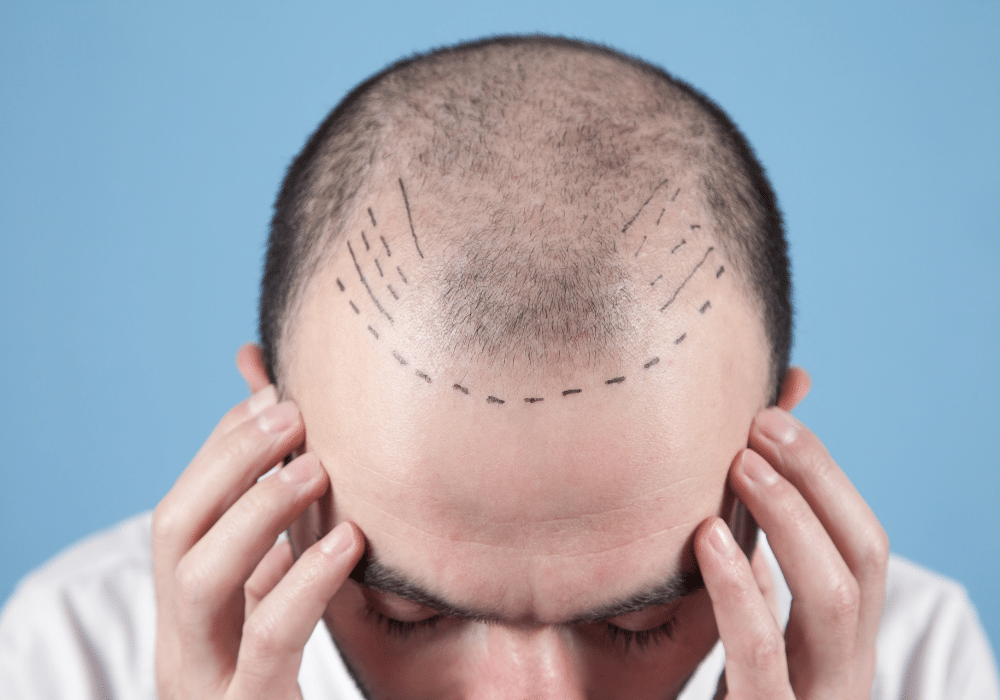
Hair loss can change how you see yourself, especially as your hairline recedes or the thinning at your crown becomes harder to disguise. In these cases, a hair transplant can become an increasingly attractive option. But if you’ve started researching your options, you’ve probably come across two terms: FUE and FUT.
Both are properly established hair transplant techniques. They both involve moving healthy hair follicles from a donor area to areas affected by hair loss. The difference really lies in how those follicles are harvested – and that has important implications for scarring, recovery, hairstyle choices and the number of grafts available.
For many men, the question isn’t simply which technique results in the fullest head of hair. It’s whether they’ll be left with a visible scar at the back of their head, whether they’ll be able to keep their usual hairstyle, and whether the result will look natural years down the line.
Let’s look at what separates FUE from FUT, what to expect during recovery and how to decide which approach suits you best.
What Is the Difference Between FUE and FUT?
FUE stands for Follicular Unit Excision (also commonly called extraction), while FUT stands for Follicular Unit Transplantation. Both methods harvest natural groups of hair follicles, known as follicular units or grafts, which are then transplanted into areas where more coverage is needed.
The crucial difference is the way the donor hair is removed. Let’s get into it:
FUE: Individual Hair Follicles
With an FUE hair transplant, the surgeon extracts individual follicular units (hairs, in case that was unclear) from the donor area using a small circular instrument. These grafts are then placed into tiny incisions in the scalp.
FUE leaves numerous small, round, almost invisible scars across the donor area. When the procedure is performed properly, these are usually very hard to notice if the surrounding hair covers the scalp.
FUE is often attractive to men who prefer shorter hairstyles or want to avoid a single visible line at the back of their head. However, it’s not scar-free, and extensive or poorly planned extraction can leave noticeable thinning or scattered scars.
FUT: The Strip Method
FUT takes a different approach. The surgeon removes a narrow strip of hair-bearing skin from the donor area, usually at the back of the head. The wound is closed with sutures or staples, and the strip is carefully divided into individual follicular unit grafts for transplantation.
The main trade-off is the scar. FUT leaves a linear scar across the donor area, which can usually be concealed by surrounding hair but may become visible if you wear your hair very short or if the scar heals more widely than expected.
One potential advantage is that FUT can provide a substantial number of grafts while avoiding the widespread extraction pattern associated with FUE. As such, it can be useful for patients who need more extensive restoration or want to preserve most of their donor hair for future procedures.
We want to note here – neither technique is automatically better. Both can produce excellent results when carefully planned and performed by an appropriately qualified, experienced surgical team like at Europe Surgery.
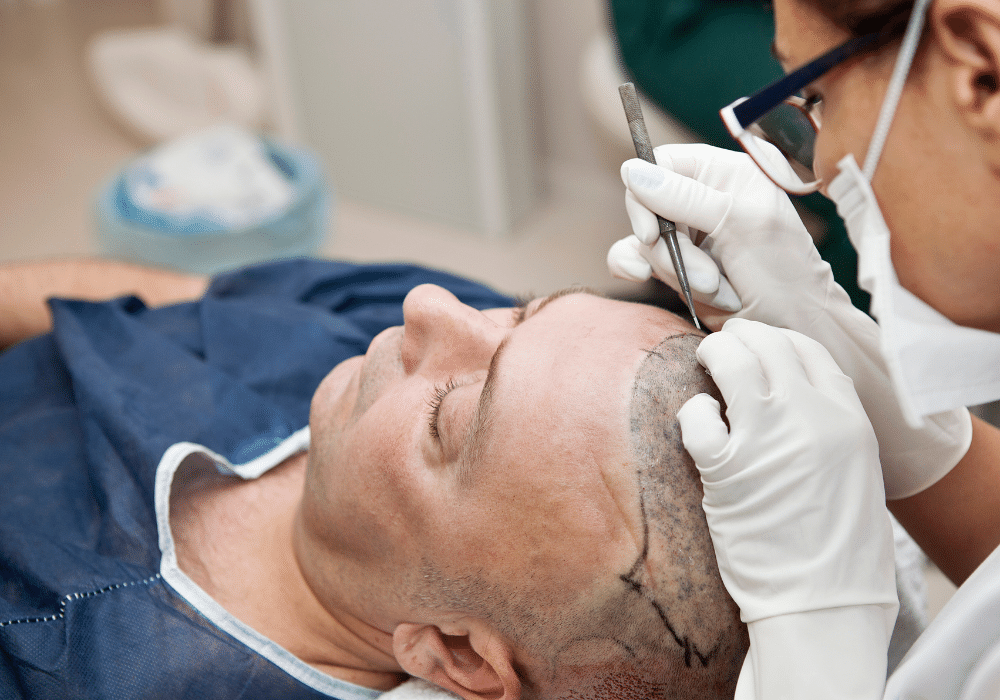
FUE Hair Transplant Scar Healing: Will People Notice?
Let’s address the concern that often makes people hesitate before booking a consultation.
You might be comfortable with the idea of having more hair at the front of your head. But the thought of a visible scar at the back (particularly one that gives away the fact you’ve had surgery) can feel like a deal-breaker.
The reassuring news is that hair transplant scars are mostly discreet (provided you have a professional surgeon like Dr Marwan Saifi). The important distinction is that FUE and FUT leave different types of scars, not that one leaves scars and the other doesn’t.
Tip: To find out more about how hair transplants heal, read our dedicated blog on the topic.
What does an FUE scar look like?
Each extracted follicular unit leaves a tiny wound that heals into a small, round scar. Once healed, these marks are generally difficult to distinguish individually, especially when surrounded by hair.
However, their visibility depends on several factors, including your skin and hair characteristics, how many grafts are removed, the distribution of extraction sites and the skill of the surgeon.
If too many follicles are taken from one area, the donor region can look patchy or noticeably thinner. This is sometimes referred to as overharvesting, and it can be difficult to correct.
What does an FUT scar look like?
FUT produces a single, linear scar where the strip of skin was removed. With good healing and adequate hair length, it can be effectively concealed.
The downside is that the scar may show if you prefer a very short back and sides. Its width also varies according to factors such as surgical technique, scalp flexibility, wound tension and individual healing.
How long does FUE scar healing take?
The small extraction wounds begin healing in the days following surgery, although the scalp needs longer to settle fully. Temporary redness, small scabs and tenderness are common during early recovery.
The wounds may become less noticeable as healing progresses, but the scars themselves are permanent. Their final appearance varies between individuals, and no responsible clinic should promise completely invisible scarring.
If avoiding visible scarring is your priority, discuss your preferred hairstyle with your surgeon before choosing a technique. Someone who keeps their hair relatively long may be comfortable with either approach, while someone who regularly has a very close fade should perhaps think more carefully about their donor area.
FUE vs FUT: Which Is Better for Short Hairstyles?
Your preferred haircut can make a real difference to which technique is most appropriate.
If you like your hair cropped close at the back and sides, FUE is likely more worth exploring because its small, scattered scars are generally less conspicuous than a linear FUT scar when hair is worn short.
However, FUE doesn’t guarantee that you can shave your head without seeing any evidence of surgery. Very short hair, extensive harvesting, skin contrast and the density of the remaining donor hair can all affect how visible the scars become.
FUT suits someone who wears their hair long enough at the back to cover a linear scar. Also, if your surgeon says that strip harvesting is the better way to use their available donor hair, we recommend taking their advice.
The decision should take into account not only how you wear your hair today, but also how you might want to wear it in the future. A good surgeon should help you understand those trade-offs before you commit.
Which Technique Gives the Most Natural-Looking Results?
This is where it helps to understand what a hair transplant actually does.
FUE and FUT are, fundamentally, two different ways of harvesting the donor hair. The transplantation process is the same – follicles are placed into the recipient area, where the surgeon must recreate a natural-looking hairline and consider the direction, angle and distribution of the hair.
Therefore, the harvesting method alone doesn’t determine whether your results look natural. Instead, a convincingly natural-looking result depends on a couple of factors, including:
- Hairline design: The hairline should suit your facial proportions and age, rather than simply recreating the hairline you had as a teenager.
- Graft placement: The angle of each graft influences how naturally the hair grows.
- Donor hair quality: Hair thickness, colour, curl and the number of hairs in each follicular unit all affect the coverage you can achieve.
- Available donor supply: There is a finite amount of suitable hair to work with, so it must be used strategically.
- Future hair loss: Your existing hair may continue to thin, even after a successful transplant.
Both FUE and FUT can deliver natural-looking results. The more important question is whether the surgical plan suits your hair loss pattern, donor capacity and long-term expectations.
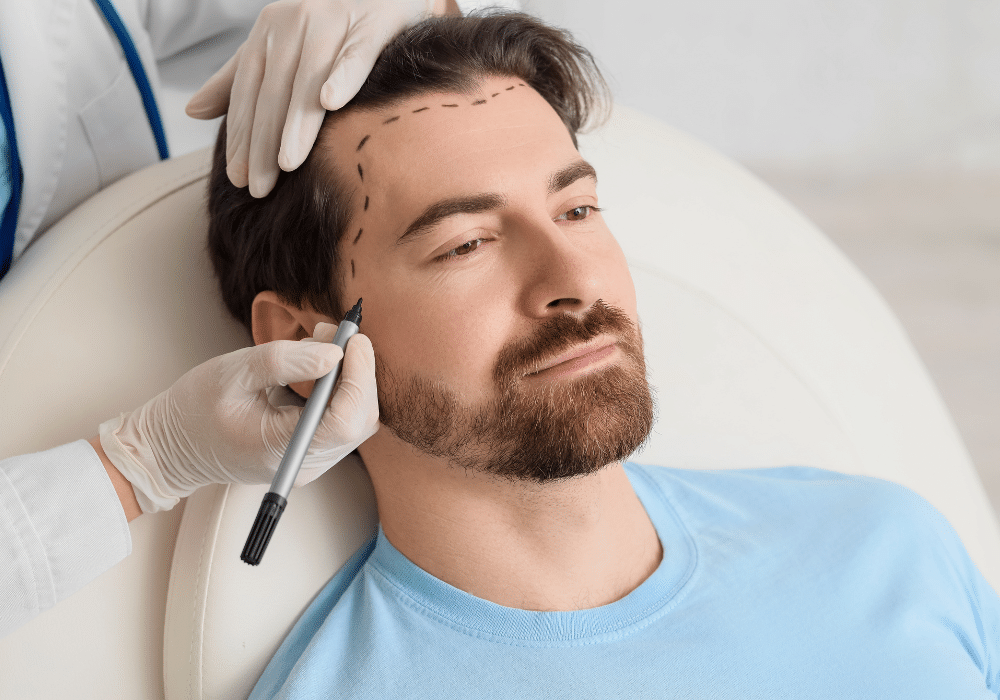
Hair Transplant Before and After Expectations: What Is Realistic?
Before-and-after photographs can be helpful when researching a hair transplant, and you’re welcome to have a good look at ours. They show what may be possible and can give you a feel for different hairlines and levels of coverage.
But it is worth looking beyond the most dramatic transformations.
A photograph showing a full head of hair doesn’t necessarily tell you how many grafts were used, how much donor hair was available, what the patient’s hair looked like before treatment or how much native hair remains.
Hair characteristics make a difference, too. Coarser hair can provide more visual coverage than finer hair, while curl and contrast between hair and scalp can change the apparent density. Have a chat with us to find out more about the results we’ve shared.
What a transplant can do
A hair transplant can restore hair to selected areas of thinning or male pattern baldness, soften a receding hairline, add coverage to the crown or improve density where you want it.
The outcome depends on your individual circumstances. A transplant redistributes existing hair; it doesn’t create an unlimited supply of new follicles.
What a transplant cannot do
It cannot guarantee the density you had before hair loss, stop every future change in your hair or ensure that you’ll never need further treatment.
Hair loss can continue around the transplanted area. This is why a sensible plan considers how your hair may change over the years, rather than concentrating exclusively on the here and now and the result you’ll see immediately after surgery.
When will you see the results?
Hair transplantation requires patience.
During the first few weeks, the transplanted hairs commonly shed. This is an expected part of the process and doesn’t mean the follicles haven’t taken. New growth usually becomes noticeable after several months, with gradually developing results.
The NHS notes that new hair often starts appearing after around four months, while the fuller result may take approximately 10 – 18 months to become apparent. Individual timelines vary, though, as with most elements of these procedures.
In other words, don’t judge your transplant by what you see in the first few weeks. The healing phase and the hair-growth phase are two different things.
Recovery: Is FUE Easier Than FUT?
Both hair restoration procedures require recovery time, and both involve small surgical wounds in the donor area and recipient sites in the scalp.
FUE is often associated with a less uncomfortable recovery and avoids the wound closure required for FUT. FUT can cause more tightness or discomfort around the donor incision, although individual experiences vary.
After either technique, you may experience temporary swelling, redness, tenderness or scabbing. You will need to protect the transplanted grafts carefully while they settle into place.
Some patients need one to two weeks away from work, and particular care should be taken during the first two weeks after surgery, when the grafts aren’t yet secure. That said, your surgeon will give you personalised advice, which should always take priority.
FUE can be particularly appealing if you’re wanting to avoid stitches and a linear scar, but don’t assume that it means an instant return to normal life. The donor area still needs to heal, and strenuous exercise or activities that risk damaging the grafts (that includes wearing hats) should likely be left for later.
If you’re travelling abroad for treatment, ask how long you should stay in the area, when you can safely fly, what aftercare is provided and who you can contact if you develop a problem once you return home.
How to Choose the Best Hair Transplant Clinic for Men
If you’re searching for the best hair transplant clinic for men, it’s easy to get distracted by impressive photographs, large graft numbers and claims about the latest technology.
A more useful starting point is the quality of the medical care and the thought behind the treatment plan.
Look for a clinic that can explain why it recommends FUE or FUT for your particular case, rather than presenting one technique as the obvious choice for everyone.
Before booking, ask:
- Who will assess you and perform the key surgical steps?
- What qualifications and experience does the surgeon have?
- Why is the recommended technique suitable for your hair loss and donor area?
- How will the surgeon protect your donor hair for the future?
- What are the realistic limitations of the result?
- Can you see relevant before-and-after photographs, including the donor area?
- What complications can occur, and how are they managed?
- What follow-up care will be available if you need help after surgery?
If you’re considering treatment abroad, these questions become particularly important. Make sure you understand the full treatment plan, the length of your stay, the aftercare arrangements and how you will access support once you are home.
A good clinic, like Europe Surgery, should welcome informed questions. You are choosing a surgical team, not simply buying a number of grafts.
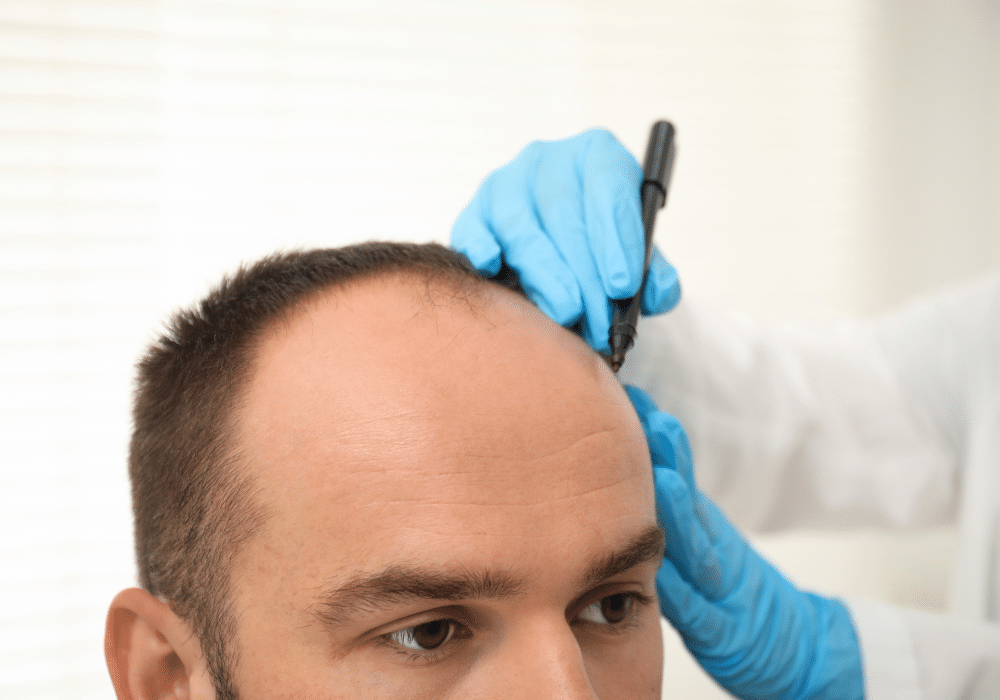
FUT vs FUE: The Best Hair Transplant Is One That Fits Your Future
It is understandable to focus on the hair you hope to regain. But the best treatment plan also considers the hair you have left, how your hair loss may progress and how you want to wear your hair after surgery.
If the thought of a visible scar has been holding you back, remember that you have options. FUE may help avoid a linear scar, while FUT offers other advantages for certain patients. What matters is understanding the trade-offs and choosing a technique that makes sense for your individual circumstances.
At Europe Surgery, a consultation is an opportunity to discuss your hair loss, explore suitable treatment options and establish realistic expectations before making a decision.
Because the goal isn’t simply to have more hair. It’s to achieve a natural-looking result that feels right for you – without compromising the health of your donor area or making promises that surgery cannot guarantee.
Frequently Asked Questions
Does FUE leave scars?
Yes. FUE leaves small, round scars at the extraction sites rather than one continuous linear scar. They are often very difficult to notice when healed, but their visibility depends on the technique, the extent of harvesting and individual healing.
Is FUT more likely to leave a visible scar?
FUT produces a linear scar at the back of the head. It can usually be concealed by surrounding hair, but may be visible with very short hairstyles or if healing results in a wider scar.
Can I shave my head after an FUE transplant?
Possibly, but you shouldn’t assume the scars will be invisible. FUE scars can become noticeable with very short hair, particularly after extensive harvesting. Discuss your usual haircut and future hairstyle preferences with your surgeon beforehand.
How long does it take to see hair transplant results?
New growth often begins to appear after around four months, but results develop gradually. The fuller result may take approximately 10 – 18 months to really show.
Can a hair transplant stop future hair loss?
No, a transplant moves existing follicles to areas of hair loss; it unfortunately can’t stop the underlying process that may cause your remaining hair to thin. Your surgeon can discuss whether additional treatment or monitoring may be appropriate.
Will people be able to tell I’ve had a hair transplant?
A well-planned transplant aims to look natural, but the outcome depends on hairline design, graft placement, healing and your individual hair characteristics. Scarring may also be visible in some circumstances. Choosing an experienced surgical team and having realistic expectations are important parts of the process.