

It starts small. A slight bump at the base of your big toe, a little discomfort in certain shoes, maybe even an avoidance of your favourite pairs, instead choosing whatever feels the “least sore.”
But over time, that small, insignificant issue can turn into something that you notice with every step you take – persistent pain, difficulty walking, and a constant frustration when it comes to finding comfortable footwear.
If this sounds familiar, you’re likely dealing with a bunion (medically known as hallux valgus). And if it’s affecting your daily life, it may be time to consider a more permanent solution than your cosiest slippers at the end of a day.
In this guide, we’re walking you through bunion removal surgery, what to expect from recovery, and how modern, minimally invasive bunion surgery can help you move comfortably again. Let’s get into it.
What is a Bunion, and Why Does it Get Worse?
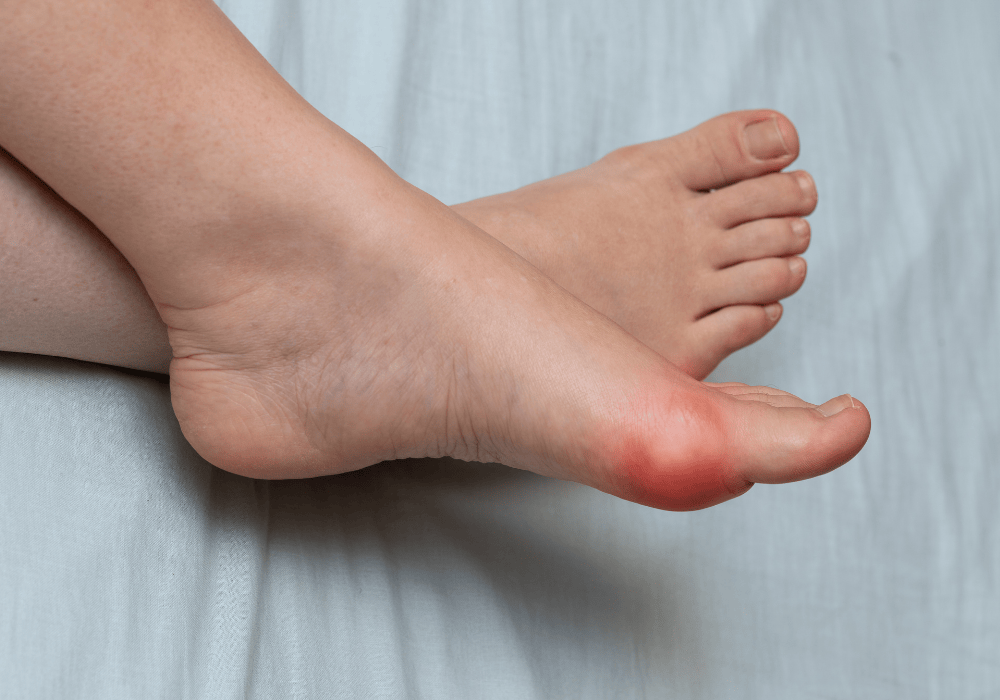
A bunion is a bony protrusion that forms at the joint of the big toe, as the toe is pushed out of alignment and begins to shift inward toward the others. As the toe begins to angle inward, the joint itself pushes outward, creating that bony prominence.
Unfortunately, while the appearance of that bony lump may be bothersome, that’s the least of your worries with bunions. As the alignment worsens, the mechanics of your entire foot change. Walking can start to feel uneven or uncomfortable as pressure that’s usually distributed across your foot becomes concentrated in one area. Shoes that once fit easily will rub or feel restrictive. You might find yourself subconsciously adjusting how you stand or move to avoid discomfort, which will lead to strain elsewhere, including the ankles, knees or lower back.
What’s important to understand is that bunions aren’t going to go away on their own, nor are they likely to even stabilise. Without intervention, the misalignment is likely going to continue until it’s really affecting your comfort, mobility and quality of life.

When is Bunion Removal Surgery the Right Step?
Most people don’t jump straight to surgery – and rightly so. In the early stages, simple changes like wider footwear, cushioning, or orthotics can take the edge off symptoms and make day-to-day life more comfortable. But there’s an important distinction to make: these measures manage the discomfort – they don’t correct the underlying misalignment.
Over time, many patients reach a point where those small adjustments are no longer enough. What started as occasional irritation becomes something more constant, more limiting, and harder to ignore.
You might notice that:
- Pain isn’t just after long days – it’s there more often than not
- Walking, standing, or even light activity starts to feel like a compromise
- You’re choosing shoes based on what you can tolerate, not what you actually want to wear
- The bunion itself is more pronounced or increasingly sensitive
At this stage, surgery becomes less about how it looks and more about your quality of life. It’s about restoring comfort, improving alignment, and allowing you to move naturally again – without having to constantly think about your feet.
For many UK patients, there’s also a practical consideration. Long NHS waiting lists and the high cost of private treatment can turn what should be a straightforward decision into a drawn-out process. That’s often when people begin to look at options abroad – not just for affordability, but for timely access to experienced surgical care.
The key is timing it right: not too early, but not so late that the problem has significantly impacted how you live your life.
How Does Bunion Surgery Actually Work?
Despite sounding complex, the goal of bunion surgery is straightforward: realign the joint, remove the protrusion, and restore natural function.
During the procedure, here’s what you can expect:
- You’ll be under anaesthesia for comfort
- A small incision is made near the affected joint
- The bone is carefully realigned
- The bunion is removed
- Soft tissues (ligaments and tendons) are adjusted
- The toe is repositioned and stabilised
The result is not just a neater appearance – but a foot that functions properly again.

Minimally Invasive Bunion Surgery at Europe Surgery
One of the most significant advancements in recent years is minimally invasive bunion surgery, often referred to as the MICA technique – and it’s an approach that Europe Surgery has fully embraced.
Rather than relying on large incisions, this modern method uses small, carefully placed entry points and specialised instruments to correct the deformity precisely. The goal isn’t just to “remove the bump,” but to properly realign the joint while minimising disruption to the surrounding tissue.
For patients, this more refined technique often translates into a smoother experience overall. There’s typically less trauma to the foot during surgery, which can mean reduced post-operative discomfort, smaller and more discreet scarring, and a gentler early recovery period.
At Europe Surgery, this approach is combined with careful surgical planning and experienced execution, ensuring that the correction is both effective and proportionate to your individual anatomy. We never apply a one-size-fits-all method – with us, it’s about choosing the right technique for the severity of your bunion and your long-term comfort.
For those dealing with ongoing foot pain, the appeal is clear: a solution that addresses the root cause, without the intensity traditionally associated with foot surgery.
Bunion Removal Surgery Recovery Time
One of the most common questions we get at Europe Surgery is: “What is the bunion removal surgery recovery time?” The honest answer is – recovery happens in stages. Here’s what you can expect:
- First few days: Rest, elevation and careful movement
- First 3 – 6 weeks: Protective footwear (boot or special shoe), limited weight-bearing
- 6 – 8 weeks: Many patients return to wearing normal shoes
- 6 – 12 weeks: Bones continue to heal and strengthen
- Up to 12 months: Full swelling resolution and final results
While that may sound long, most patients notice a significant reduction in pain well before the final stage. The key is following aftercare guidance closely – this is what protects your feet long-term.
Life After Surgery: What Changes?
The real impact of bunion surgery often only becomes clear once you’re on the other side of it – because it’s actually not about the look at all. It’s not about suddenly feeling like a different person – it’s about no longer having to think about your feet all the time.
Walking becomes something you do without negotiation. You’re not adjusting your stride, avoiding pressure, or mentally mapping out how long you can stay on your feet before discomfort kicks in. That low-level, constant awareness of pain will start to fade until you barely remember the days you couldn’t walk to the corner store without it being a whole thing.
Shoes become a choice again, not a compromise. Instead of defaulting to whatever feels “least uncomfortable,” you can wear what you actually like. Even small things, like standing in a queue, going for a long walk, or planning a day out, feel easier and more natural.
Most patients don’t describe the result as dramatic – they describe it as relief. A return to normal movement, normal comfort, and normal confidence in how they walk and live. And for many, that’s something they hadn’t realised they’d been missing for quite some time.
 Cost Considerations: UK vs Treatment Abroad
In the UK, bunion surgery can be expensive and often involves long waiting lists. This is why many patients choose to travel for treatment – combining high-quality care with better value.
At Europe Surgery, bunion removal surgery in Poland typically ranges from £1,500 to £3,000, depending on the procedure.
Beyond the better price, our patients benefit from:
- Modern surgical techniques, including minimally invasive options
- Shorter waiting times
- Experienced surgical teams
- Clear, all-inclusive pricing
It’s not just about cost – it’s about access to timely, effective treatment that restores your quality of life.
Ready to Take the First Step?
Living with bunion pain can quietly affect every part of your day – from how far you walk to what you wear.
But it doesn’t have to be that way. With the right approach, bunion removal surgery offers a clear path back to comfort, movement, and confidence in your body.
If you’re ready to explore your options, the first step is a conversation – one that puts your comfort, mobility and long-term wellbeing first. So get in touch or call us at 0208 1444254, and we’ll be happy to guide you through the process.